


Lloyd Stevenson progressed the 16m Elite Mid Pilothouse by completing hull build, flipping the hull, and starting interior bulkhead installation, showcasing high-quality craftsmanship throughout.
Lloyd Stevenson progressed the 16m Elite Mid Pilothouse by completing hull build, flipping the hull, and starting interior bulkhead installation, showcasing high-quality craftsmanship throughout.
The new 16m Elite we started building in the last newsletter has progressed rapidly. The hull build has been completed, she has been flipped over and the interior bulkhead installation started. The owners, very kindly, put on an afternoon tea for the whole factory the day the hull was flipped over…. which made the team very happy.

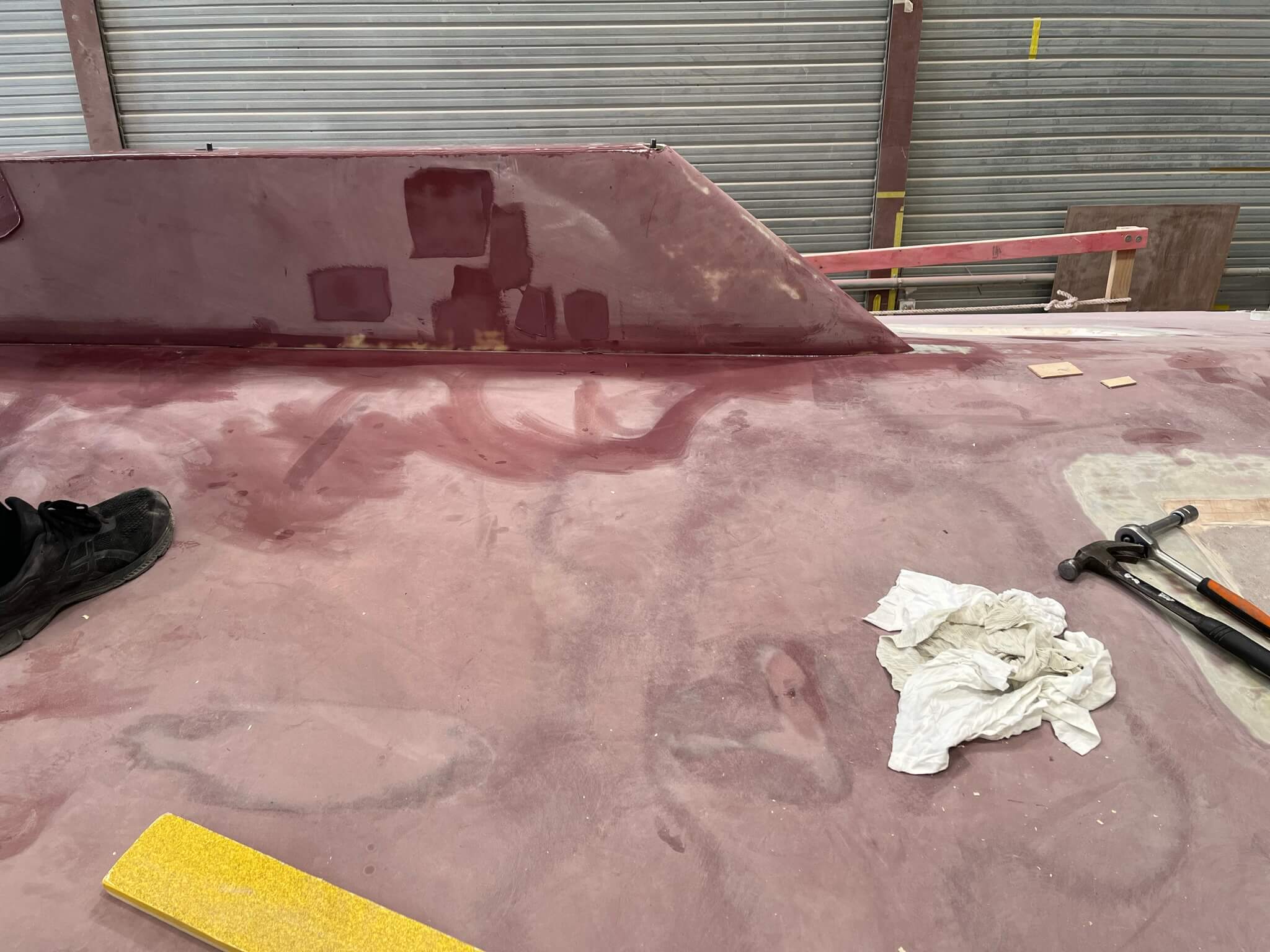
Keel fitted and all faired up
1/14
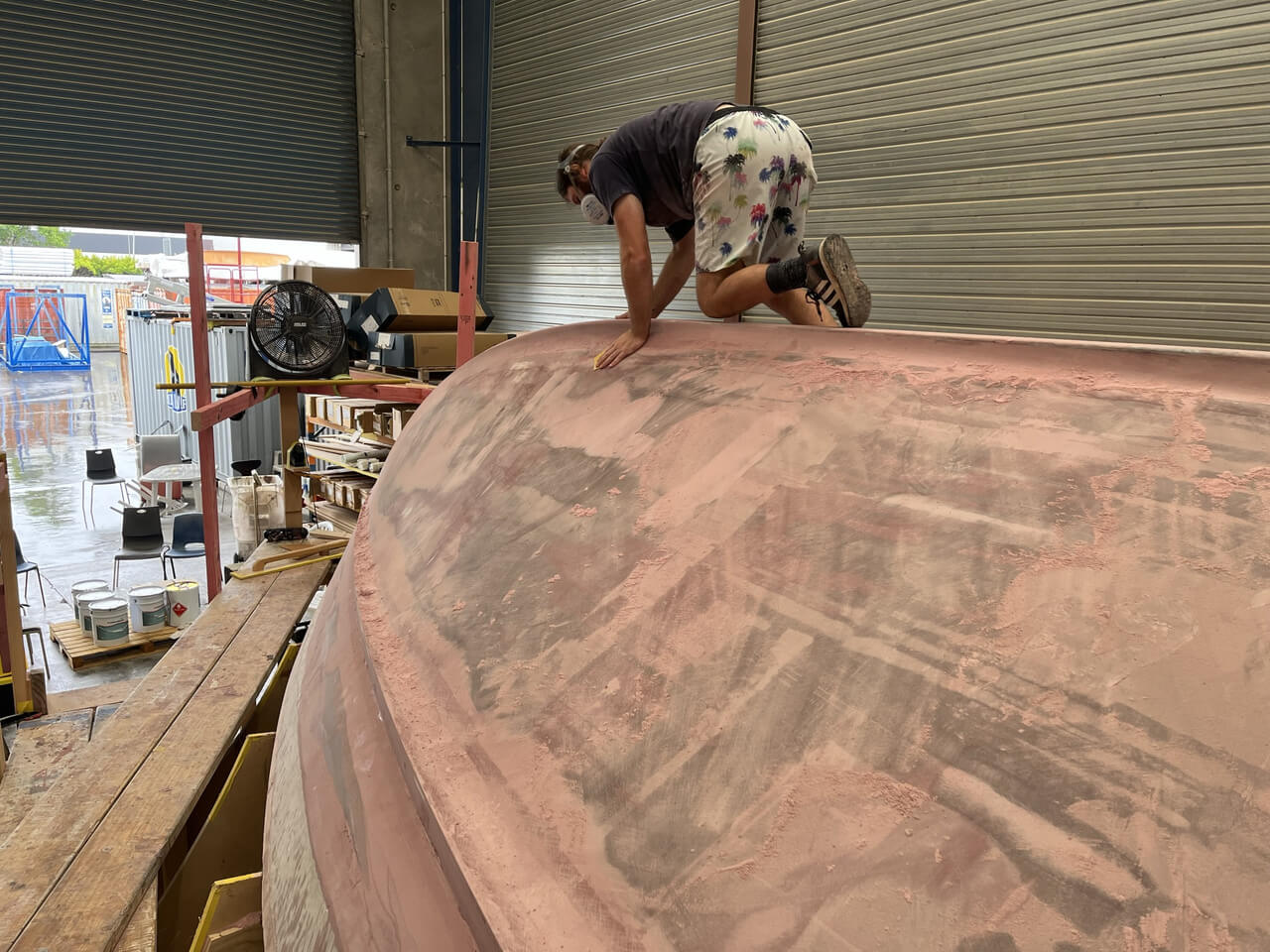
Sven & the team spend a lot of time sanding to get her very fair
2/14
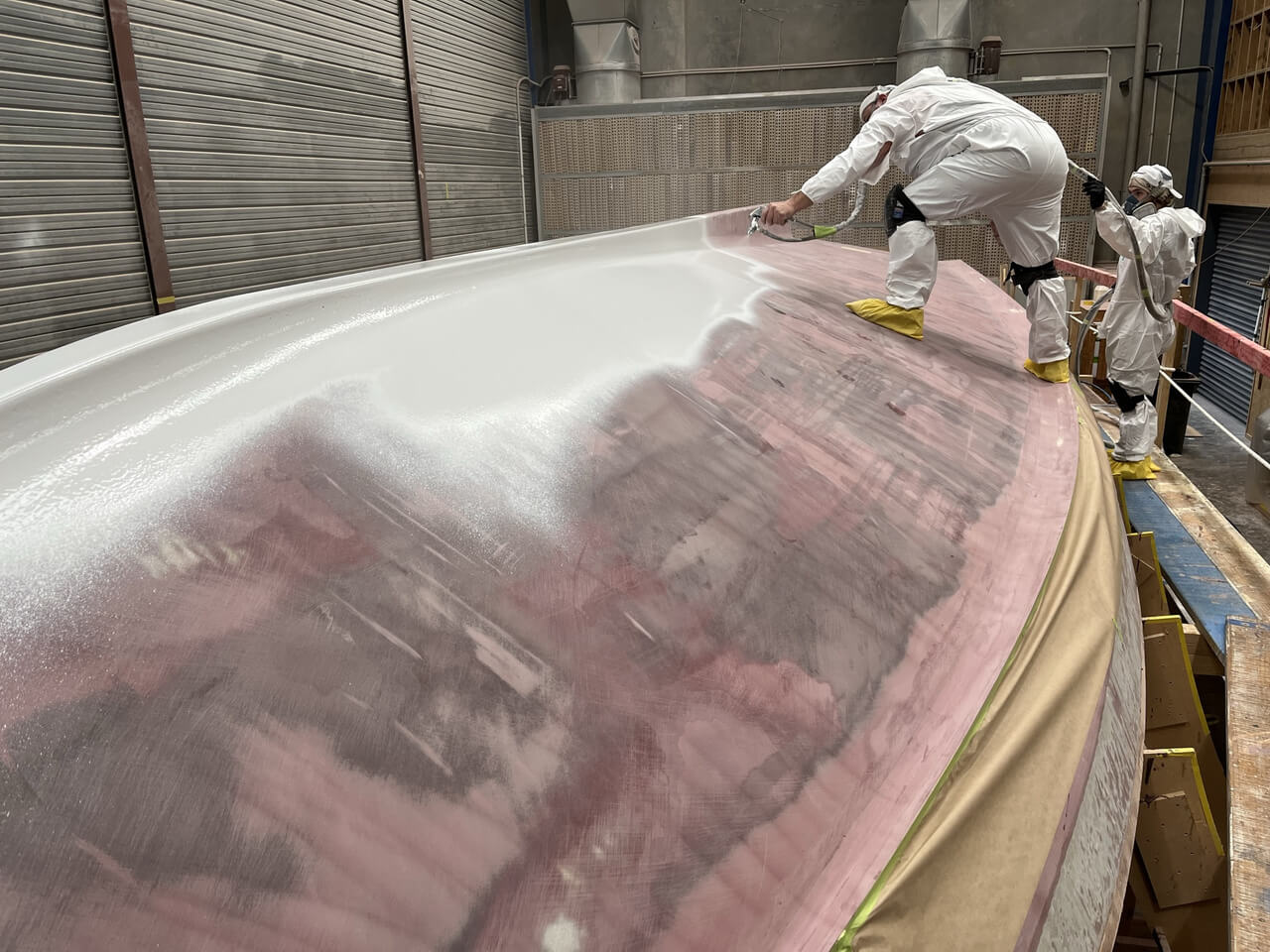
Brent and Josh starting the undercoat
3/14
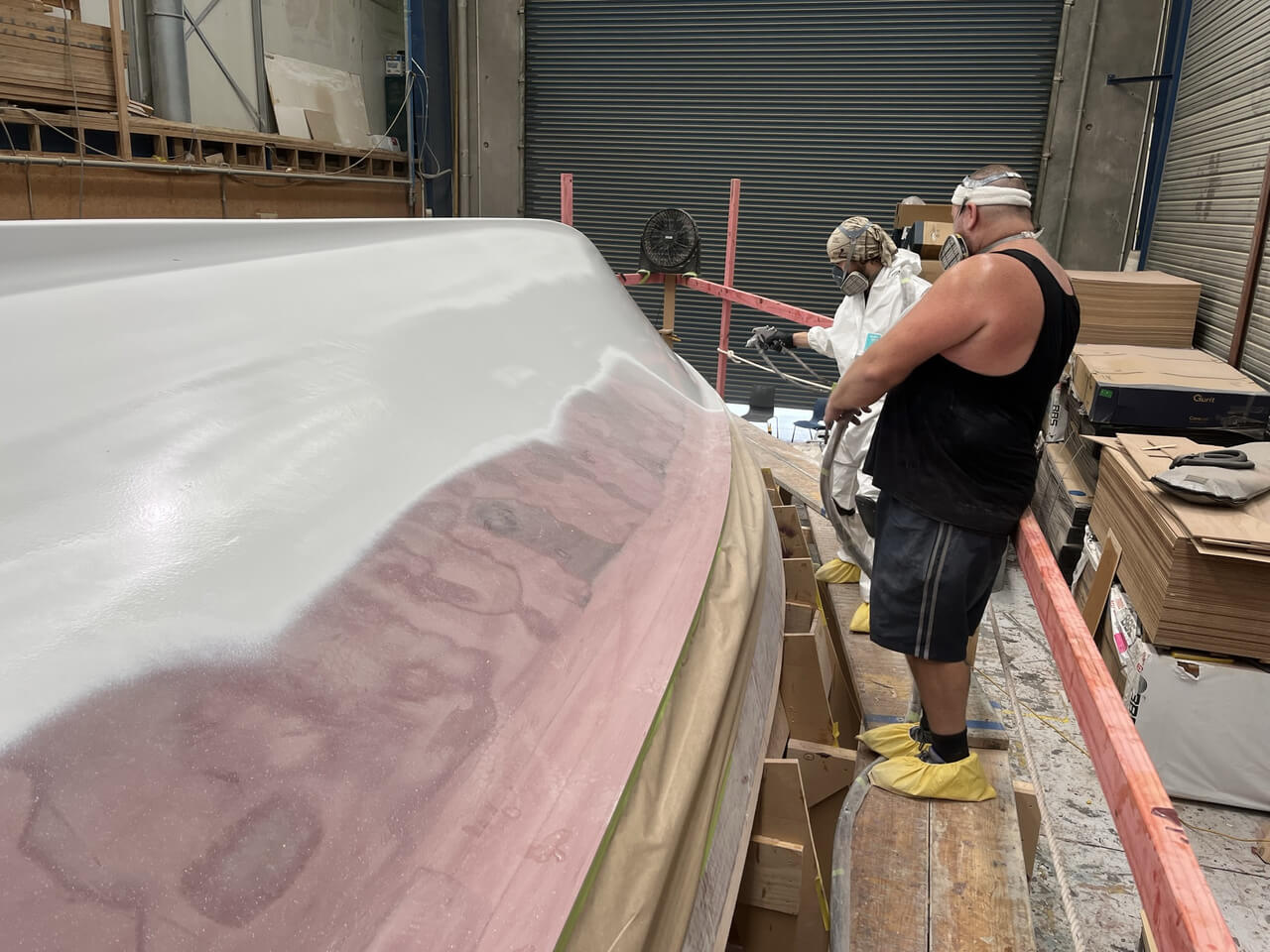
Brent teaching Josh the fine art of painting
4/14
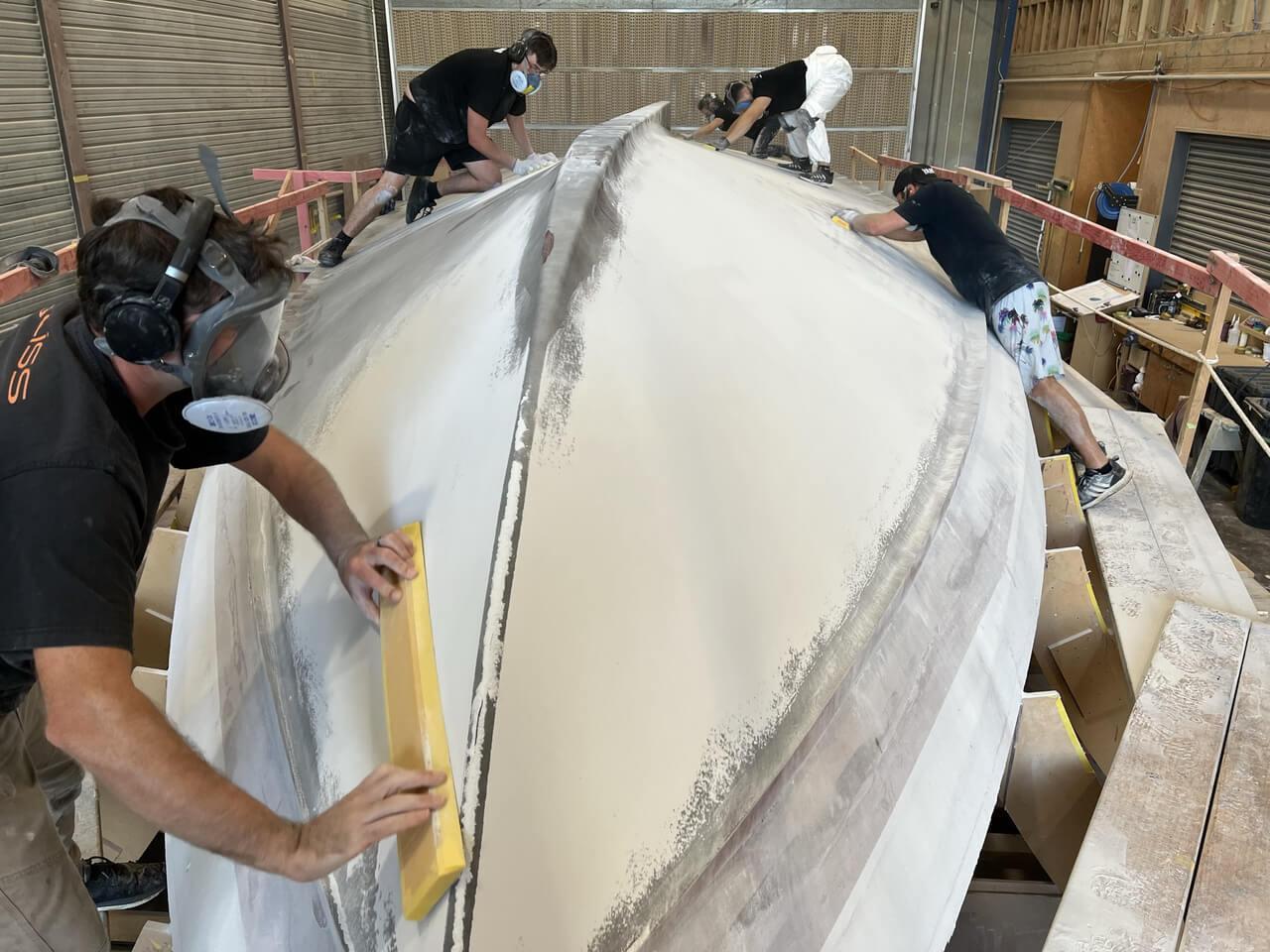
Three coats of undercoat & then back to sanding. The grey paint is a guide coat; it helps identify high and low areas while sanding
5/14

Top sides completed
6/14
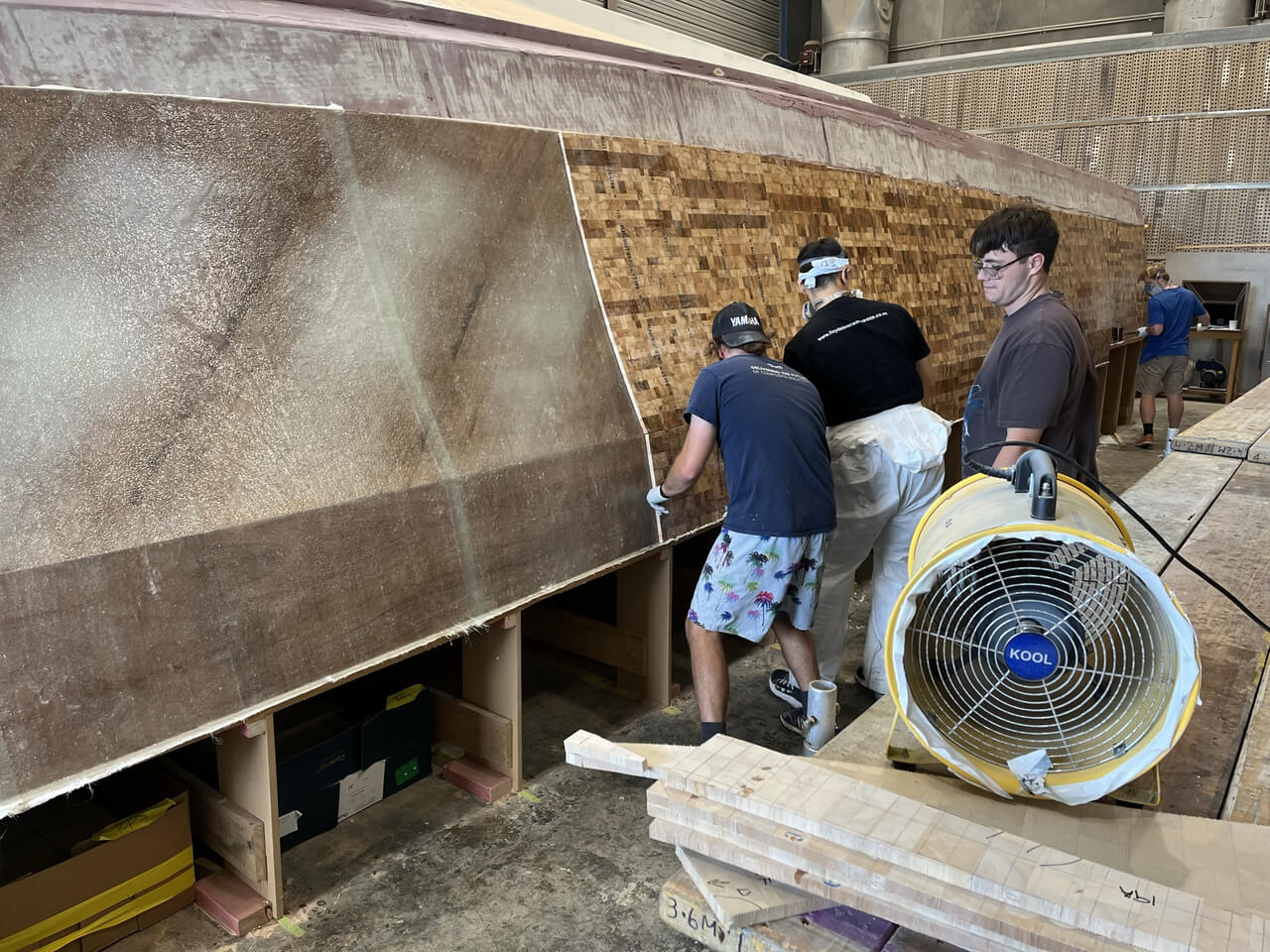
The balsa core being glued on
7/14
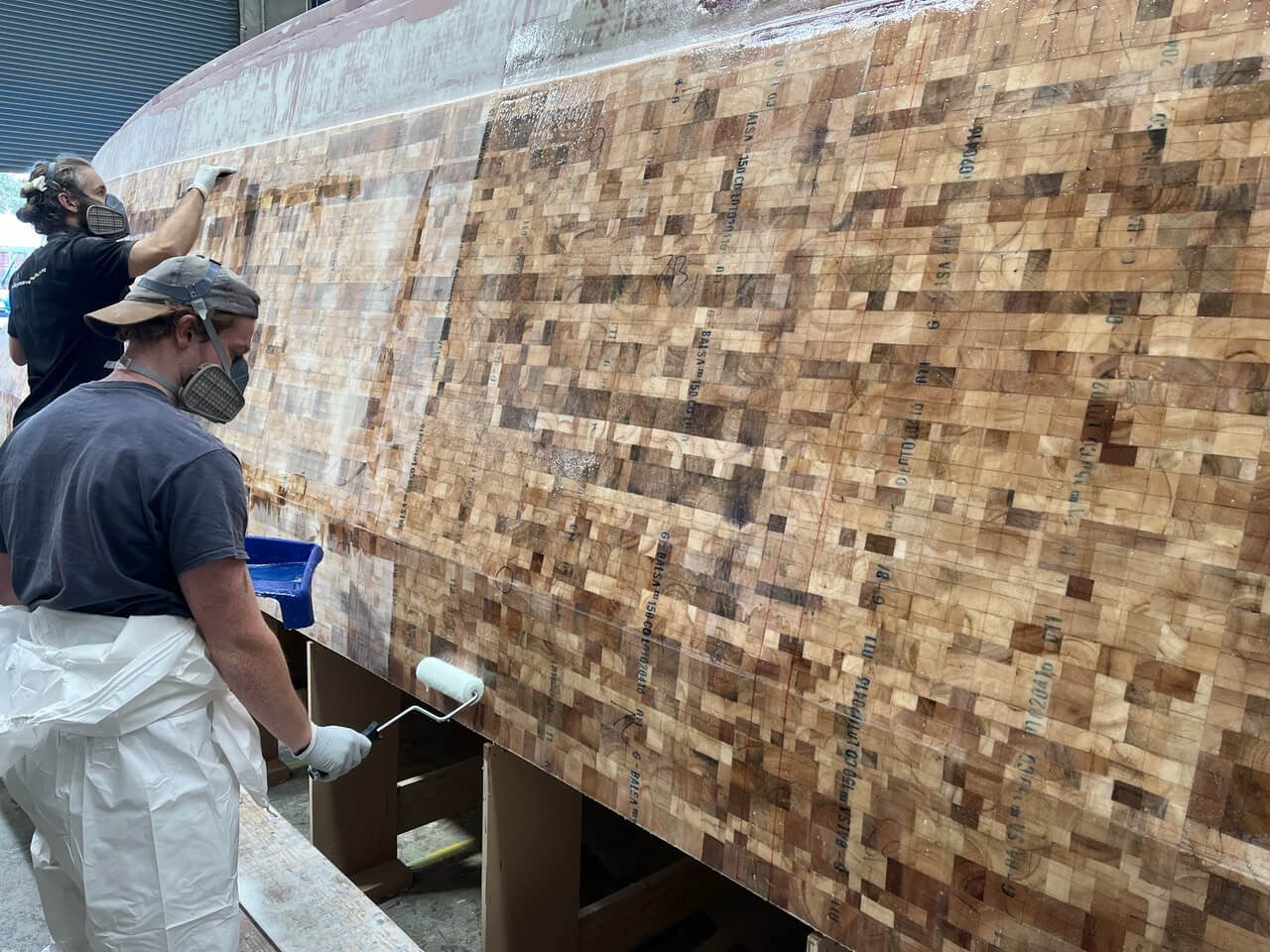
Fibreglass lamination over the core begins
8/14
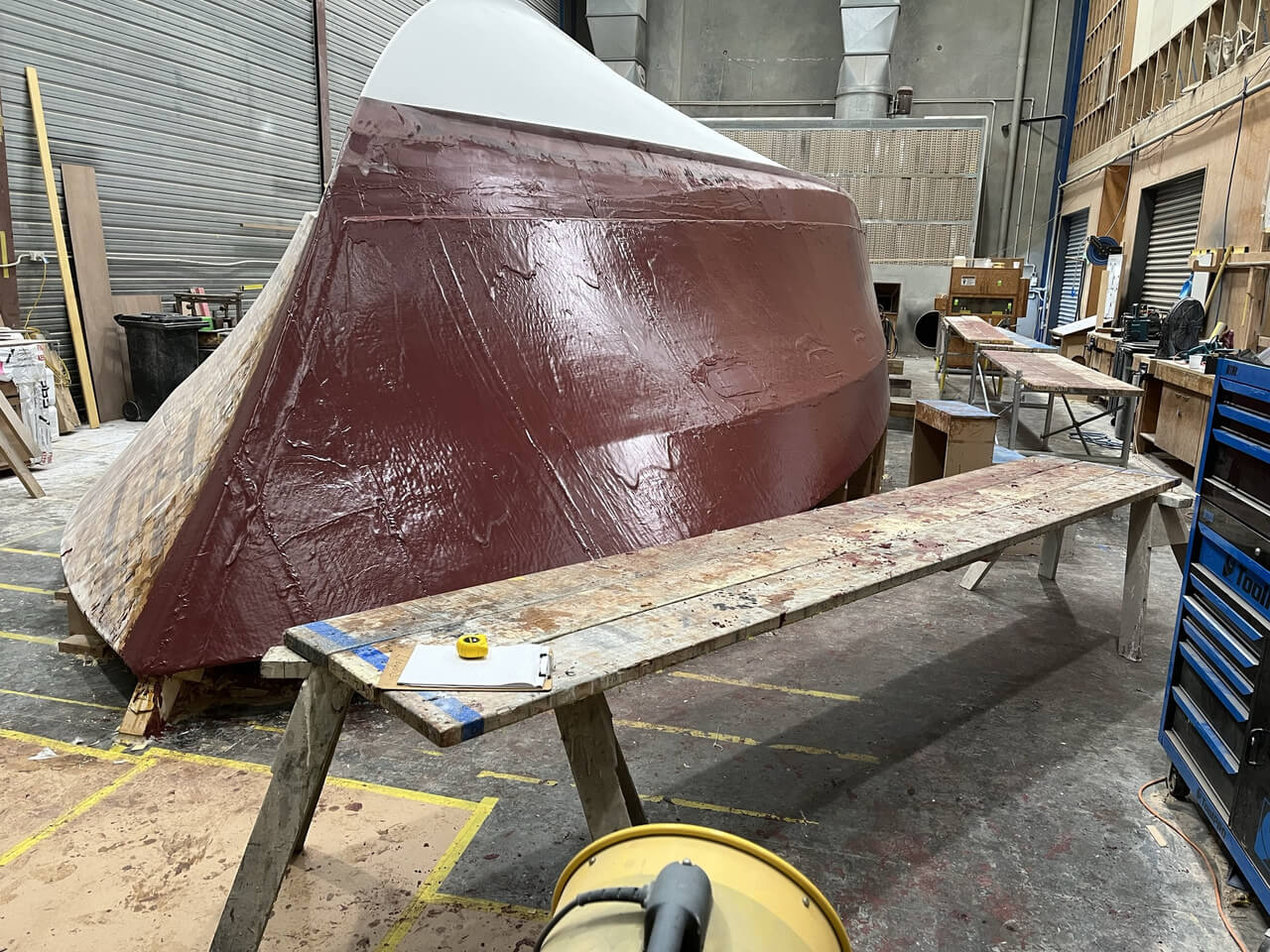
Filler applied, ready for fairing You may have noticed some oval shapes on the starboard side. These are sacrificial blanks that fill the window holes, they make fairing the topsides much easier; once all the fairing is completed they are removed
9/14
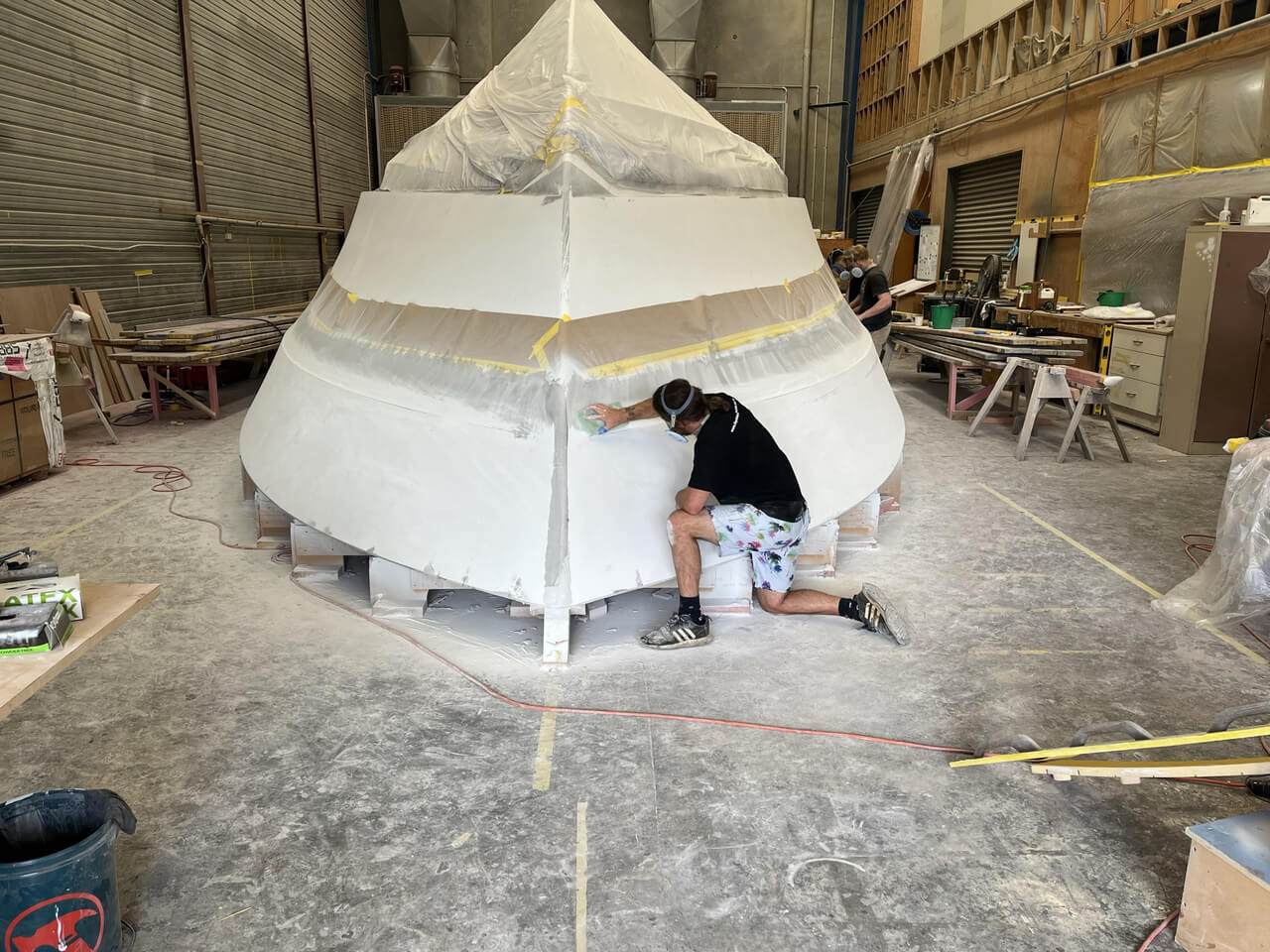
High build undercoated, guide coated and more sanding to get her as fair as she can be. The sharpness of her lines is a testament to the high-quality work by Sven and his team
10/14
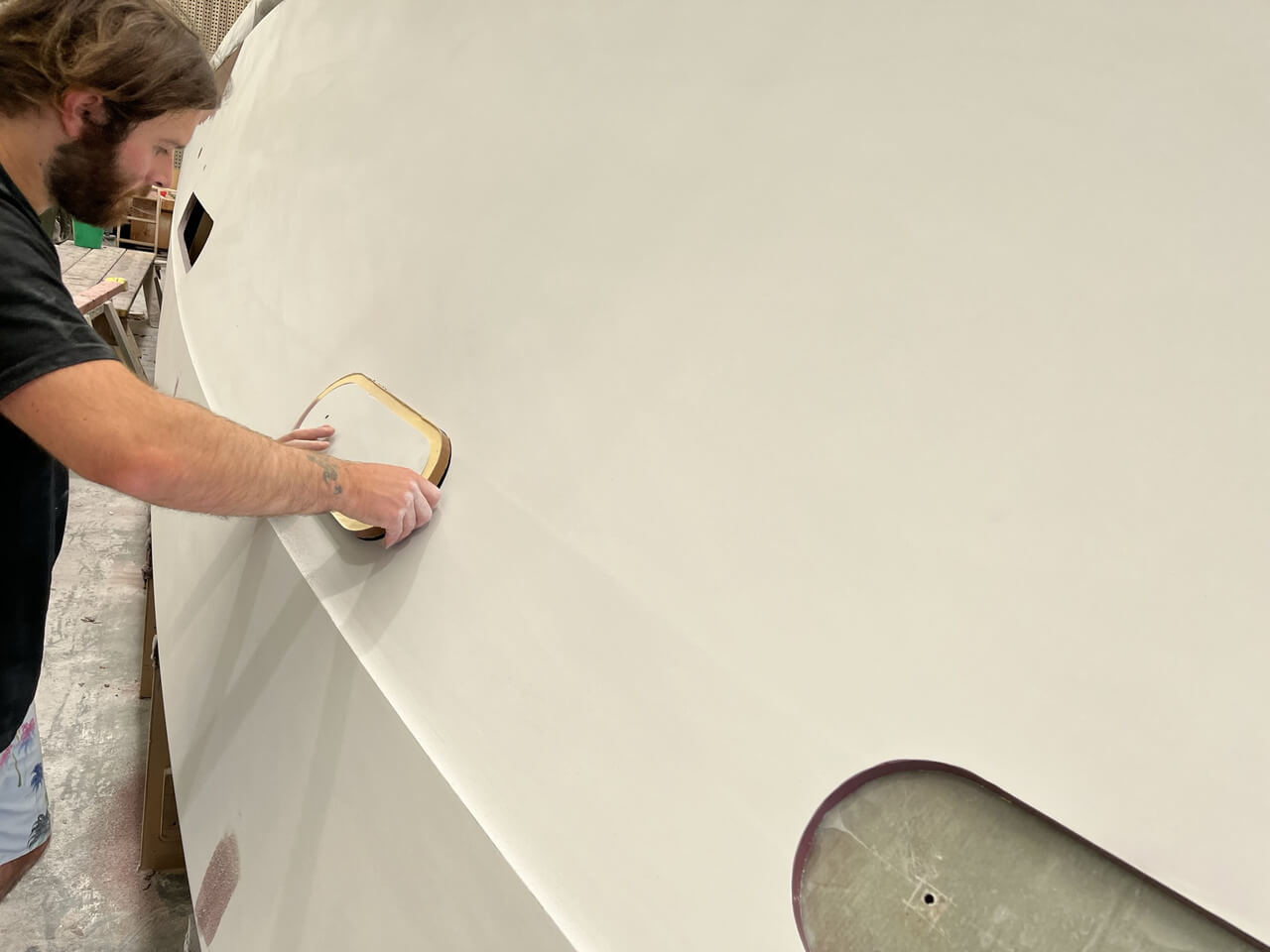
Remember the sacrificial window blanks. Here is Sven removing them
11/14
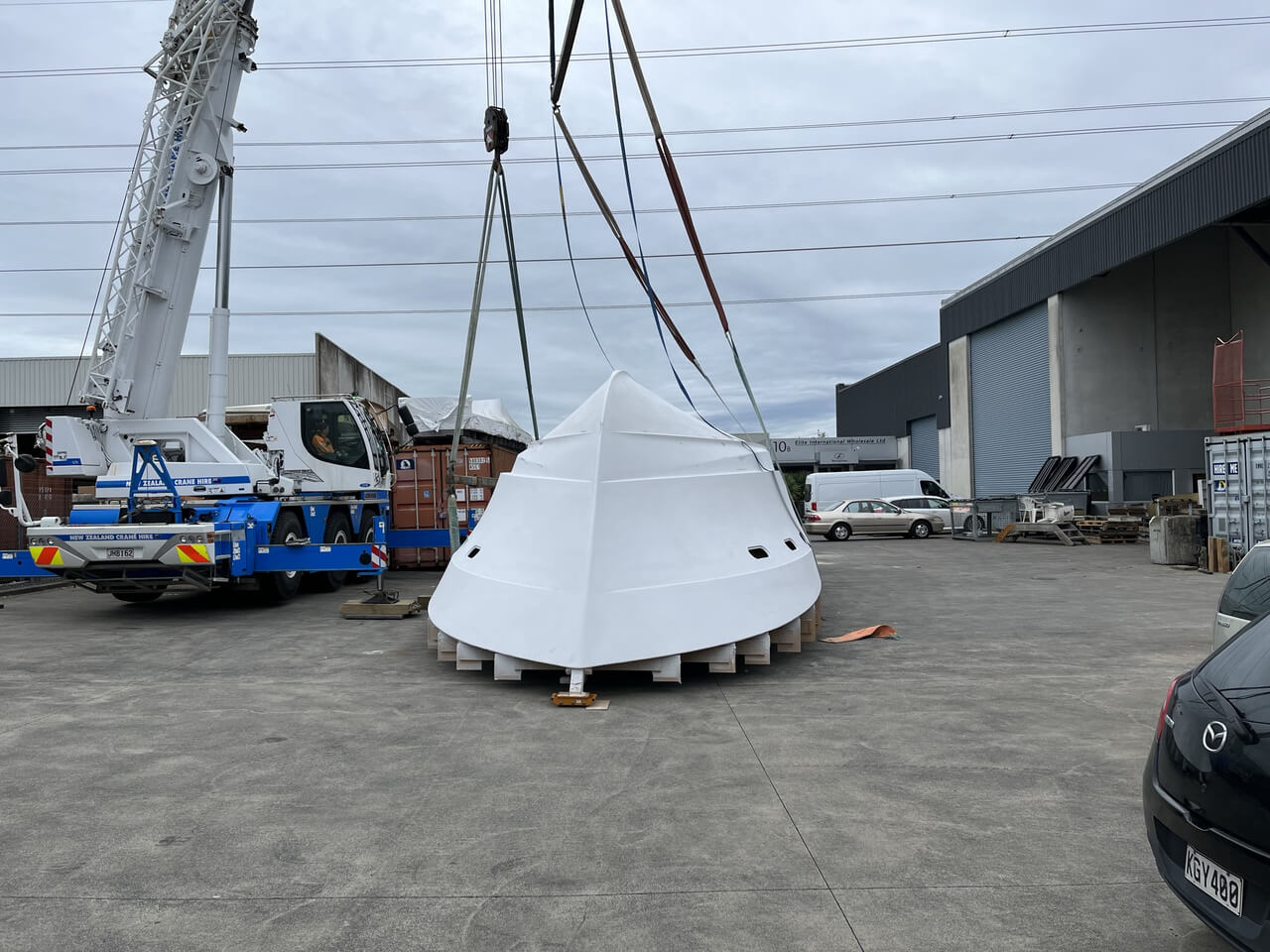
The big day has arrived; hull flip
12/14
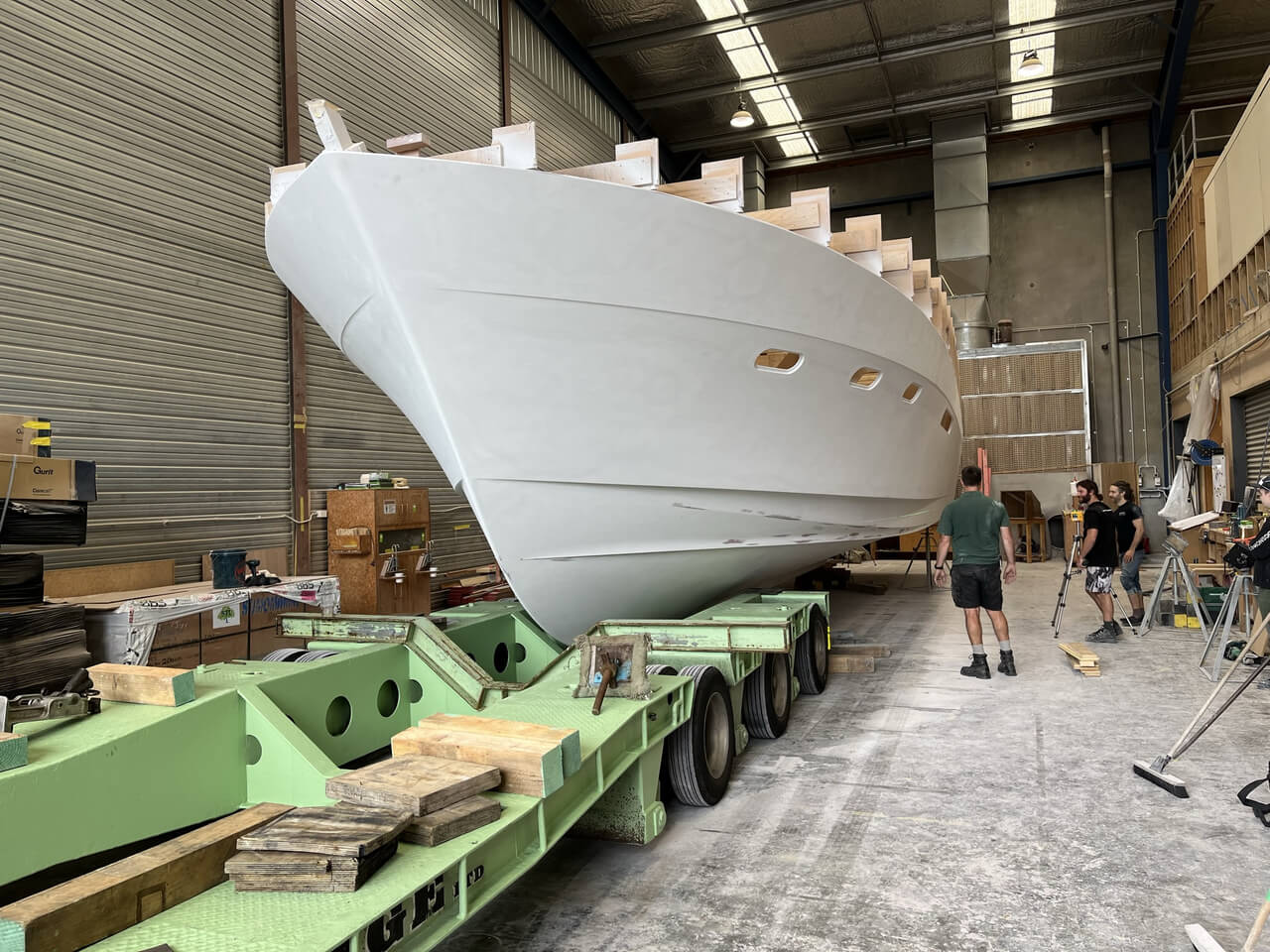
Turned over and back in the shed
13/14
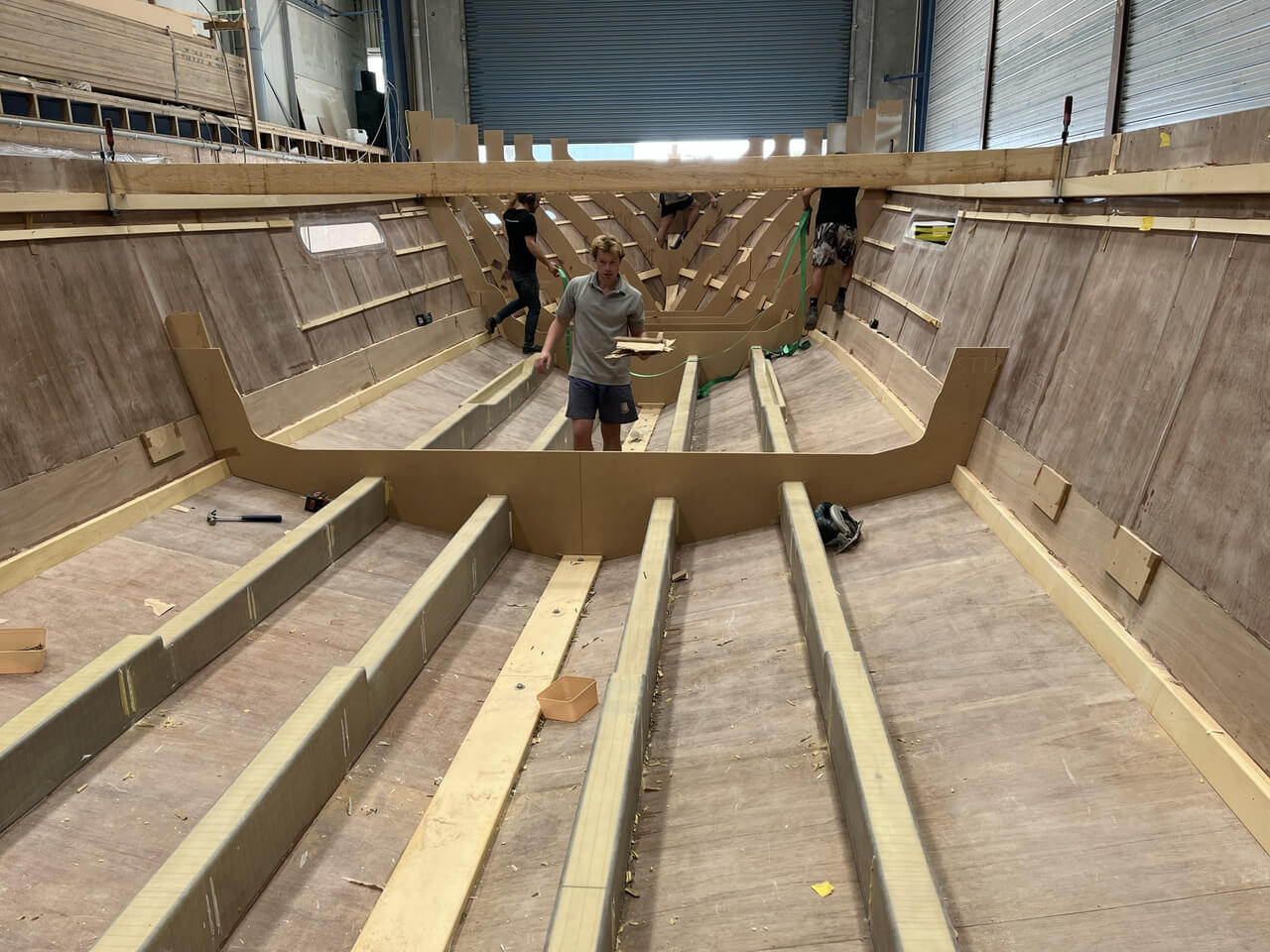
Now the real work can begin; starting with the temporary frames being removed
14/14


Keel fitted and all faired up
1/14

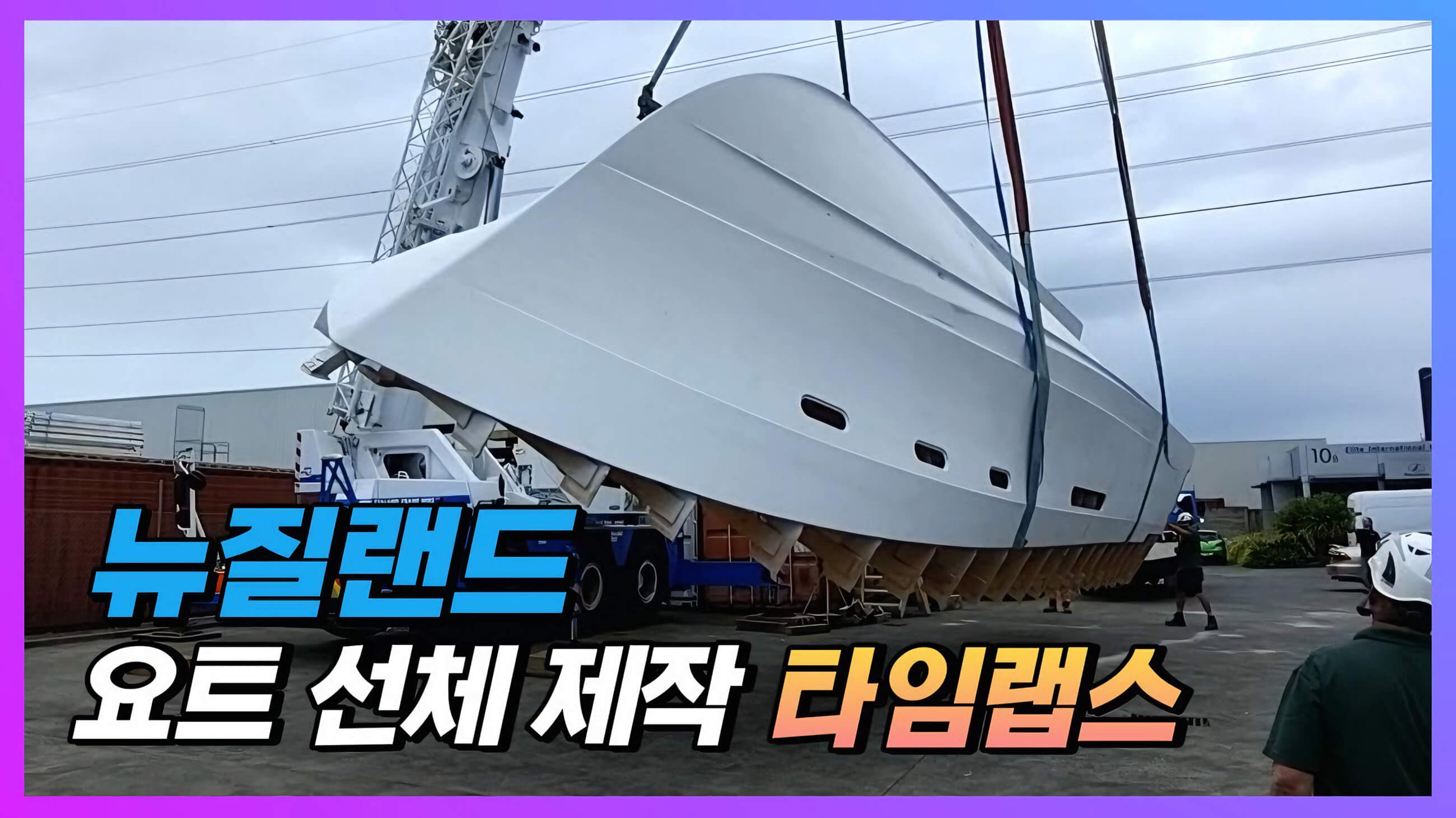
And for those of you who stuck with it and got through all those photos, here is a little reward. Serim put this video together. Six months of build in 3 minutes 43 seconds.
Frequently Asked Questions
What does flipping the hull mean and why is it important in the build process?
Flipping the hull means turning it right side up after the initial construction of the hull bottom. This step allows work to continue on the interior and topsides, and is a major milestone in the build.
How is the hull prepared to ensure a smooth and fair finish?
The team applies multiple coats of undercoat and guide coats, then sands carefully to identify high and low areas, using techniques like sacrificial window blanks to help with fairing.
What progress has been made after flipping the hull?
After flipping, the interior bulkheads installation started, temporary frames were removed, and the team began refining the superstructure and interior fit-out.

 Previous article